

Coat Colors and Patterns
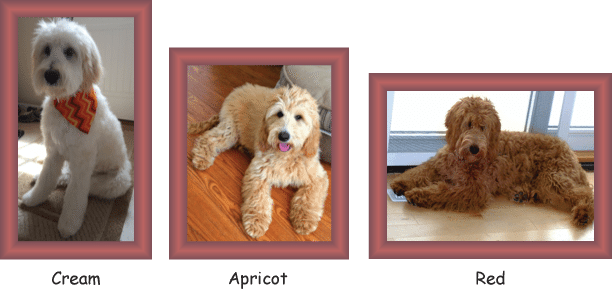
Goldendoodles come in a wide range of coat colors. Common shades such as cream, apricot, and red all come from the same gene—the difference is simply the amount of pigment each coat receives. This is the same pigment variation seen in Golden Retrievers, which is why a single litter can contain multiple shades of this color spectrum.
Here are some examples:
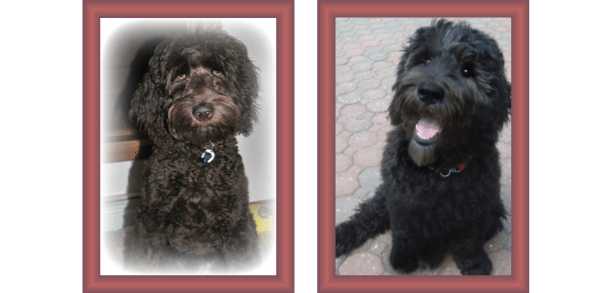
Other Goldendoodle coat colors include:
-
Chocolate
-
Black
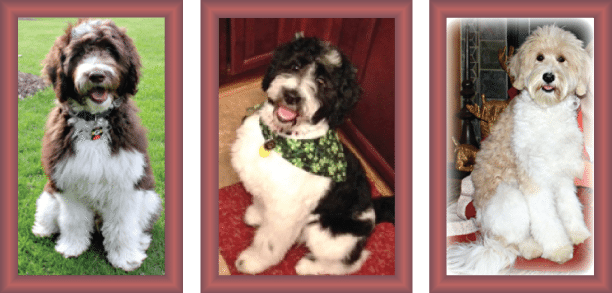
In addition to color, Goldendoodles can exhibit different coat patterns. One of the most common is the parti pattern.
To be considered parti, a Goldendoodle must be at least 50% white, with the remaining color appearing in patches. The parti pattern can occur with any coat color.
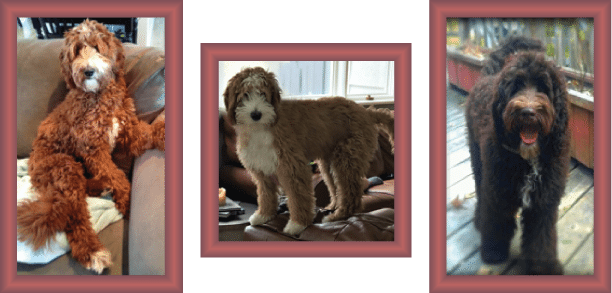
Goldendoodles may also display patches of white on their coats. When the white markings are less than 50%, the dog is classified as an Abstract.
Bernedoodle Coloring
Bernedoodles—born from the Bernese Mountain Dog and the Poodle—inherit a stunning variety of coat colors and patterns. Their coloring ranges from classic Bernese-inspired tri-color to rare and uniquely patterned coats influenced by the Poodle’s genetics. Because both parent breeds carry multiple color genes, Bernedoodle litters can be visually diverse, even among puppies from the same parents.
Common Bernedoodle Colors
Tri-Color (Traditional Bernese Pattern)
The most iconic Bernedoodle coloring is the tri-color, which resembles the Bernese Mountain Dog. This pattern typically includes:
-
Black base coat

-
Rust or tan points on cheeks, eyebrows, chest, and legs
-
White blaze on the face, chest, and paws
This is one of the most sought-after patterns and is often associated with higher demand and pricing due to its complexity and rarity in breeding.
Bi-Color
Bernedoodles can also have bi-color coats, usually:
-
Black and white
-
Black and tan
Bi-color dogs may still resemble the Bernese Mountain Dog but with fewer pattern points and less contrast.
Merle
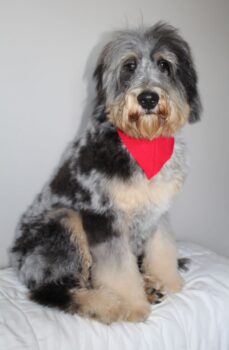
Merle Bernedoodles inherit mottled patches of lighter and darker color, typically blue, gray, chocolate, or tan. Merle coats can ap
pear marbled or speckled, often with striking blue or partially blue eyes.
Note: Ethical breeders avoid pairing two merle carriers due to the risk of health complications.
Chocolate / Brown
A recessive gene can produce Bernedoodles with solid chocolate or deep brown coats. These dogs may have lighter eyes and noses compared to black-based coats.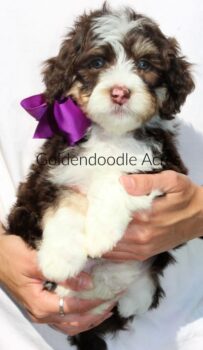
White Markings and Abstract Patterns
Bernedoodles may also display:
-
Abstract patterns: small white markings (less than 50% of the coat) on the chest, head, or paws
-
Parti patterns: large amounts of white (50% or more) mixed with another color
-
Irish spotting: symmetrical white areas similar to traditional Bernese markings but not necessarily tri-colored
Color Changes Over Time
Because Poodles often carry genes that cause fading, many Bernedoodles lighten as they age. Black may become silver or charcoal, while sable and chocolate coats often become softer and lighter. Tri-color patterns usually remain recognizable, but their intensity may shift.